


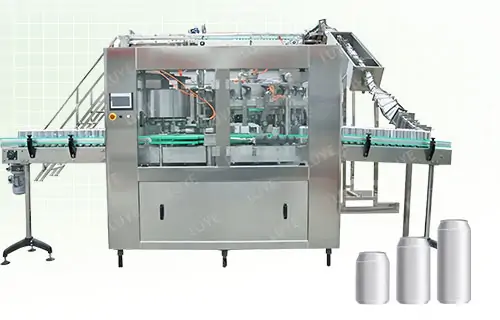




How Does a Water Filling Machine Maintain Stable Filling
A water filling machine plays an important role in maintaining stable filling quality and continuous production for bottled water manufacturers. At Luye Packaging, engineers focus on the way the rinsing, filling, capping, and conveying sections work together. In actual production, small changes in filling level, conveyor speed, or cap handling can affect product quality and line stability.
Water Filling Machine Controls Each Filling Stage:
A water filling machine combines bottle rinsing, water filling, capping, and bottle transfer into one coordinated production process. Each section needs to run at a suitable speed so bottles can move smoothly from one stage to the next.
During installation and commissioning, Luye technicians usually check the connection between each unit rather than adjusting one machine separately. For example, a slow bottle conveyor can cause bottles to accumulate before the filling section. Likewise, a mismatch between filling and capping speeds may interrupt continuous production.
Engineers pay attention to:
- Bottle feeding and positioning
- Rinsing and filling timing
- Filling level consistency
- Cap feeding and capping operation
- Conveyor speed matching

As a result, these details can reduce unnecessary adjustments during daily production.
Filling Control Supports Stable Water Production:
Water filling requires consistent control of filling time, liquid flow, and bottle positioning. Meanwhile, different bottle sizes and production capacities may require different filling parameters.
For bottled water production, the filling system needs to deliver the required amount of water into each bottle while maintaining a stable production speed. The filling method and valve configuration can also vary according to the product and bottle requirements.
When configuring the equipment, Luye Packaging engineers consider the relationship between filling valves, bottle size, filling capacity, and production speed. This allows the filling process to work smoothly with the rinsing, capping, and conveying sections.
Equipment Matching Reduces Production Problems:
A complete water filling production line includes multiple machines, so their production capacities need to match properly. However, some production problems may not come from the filling machine itself. Instead, differences in speed, bottle transfer, or control between connected equipment can affect the line.
In practical projects, technicians often check:
- Bottle feeding matches the filling capacity
- Smooth transfer through the conveyor
- Filling speed matches the capping section
- Easy monitoring of key production conditions
With suitable equipment matching, manufacturers can reduce bottle accumulation, empty positions, and unnecessary production interruptions.

Water Filling Solutions Adapt to Different Applications:
Bottled water manufacturers may use different bottle sizes, production capacities, and packaging layouts. For this reason, a small production line and a high-output bottled water line may require different equipment configurations.
A water filling machine can be configured according to bottle size, output demand, filling process, and factory layout. Before equipment selection, Luye Packaging communicates with customers to understand these requirements and determine a suitable configuration.
For PET bottle production, the filling machine can also connect with bottle conveying and downstream packaging equipment to form a coordinated production line.
Maintenance Supports Long-Term Operation:
Regular maintenance helps keep a water filling machine running smoothly. Operators need to check filling valves, conveyor components, cap handling systems, pumps, and control components according to equipment requirements.
During daily production, timely cleaning and inspection can help reduce equipment interruptions. In addition, operators should pay attention to abnormal sounds, unstable bottle transfer, filling level changes, and other operating conditions.
Clear operating procedures and timely technical support also help production teams manage the equipment more effectively and maintain stable operation.
FAQ:
Q1: What products can a water filling machine handle?
A: A water filling machine is mainly used for filling bottled water into PET bottles and other suitable containers. The final configuration depends on the bottle size, filling capacity, and production requirements.
Q2: Why is equipment matching important in bottled water production?
A: Equipment matching affects filling speed, bottle transfer, capping, and overall line stability. Each section needs to work together to maintain continuous production.
Q3: What should operators check during daily production?
A: Operators should check filling valves, bottle conveying, cap feeding, pumps, control systems, and other maintenance points according to equipment requirements.
Q4: Can a water filling machine be connected with other packaging equipment?
A: Yes. A water filling machine can connect with bottle conveying, capping, labeling, and other packaging equipment according to the production process and factory layout.


