


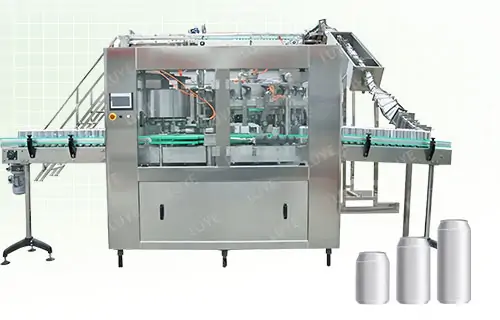




What Production Needs Suit Large PET Bottle Filling Machines
Large PET bottle filling machines are designed for beverage production that uses larger plastic containers rather than standard small bottles. Luye works with projects for large-volume drinking water, mineral water, and other liquid products, with equipment selection based on bottle size, output, filling method, and downstream packaging requirements.
For large PET bottles, the filling system needs to handle heavier containers while maintaining stable bottle transfer, filling accuracy, capping, and conveying throughout production.

Large PET Bottles Suit Higher-Volume Beverage Packaging:
Large PET bottles can reduce the number of containers needed for products sold in higher-volume formats. Luye supplies equipment for PET bottles in different sizes, including large-bottle water applications. The 3–10L water filling line, for example, supports PET bottles with diameters of about 120–200 mm and bottle heights around 250–400 mm.
This format suits drinking water, mineral water, and purified water where consumers need more liquid per container.
Bottle Size Determines the Filling Equipment:
Large bottles have greater weight and different dimensions from standard PET bottles. These differences affect bottle conveying, rinsing, filling, capping, and line layout.
Before selecting a water filling production line, technicians normally check the bottle volume, diameter, height, neck specification, and required production capacity. Luye equipment can support round or square PET bottles depending on the selected machine configuration.

Filling Stability Matters During Continuous Production:
A large PET bottle carries more liquid, so stable bottle positioning becomes important during filling and capping. The filling system needs to maintain consistent liquid levels while the conveyor transfers bottles between each station.
For large-bottle water lines, Luye uses filling methods such as gravity or isobaric filling according to the application. The equipment can also use automatic liquid-level control to help maintain consistent filling results.
- Bottle volume: Determines filling range and equipment selection.
- Production capacity: Determines the required number of filling heads and line speed.
- Bottle shape: Affects conveying and changeover requirements.
Large PET Bottles Require Compatible Downstream Equipment:
Filling represents only one part of the complete production process. Large PET bottles also need suitable bottle handling, capping, conveying, labeling, and packaging equipment.
The cap type and bottle neck determine the capping configuration. Bottle dimensions also affect conveyor design and packaging space. For projects with different bottle specifications, technicians need to check the complete line rather than select the filling machine separately.
Production Requirements Determine the Complete Line:
A large PET bottle filling project should start with the actual production requirements. Target output, bottle size, water type, filling method, packaging format, and available production space all influence equipment selection.
Luye can configure a complete beverage filling production line according to these conditions. For water applications, the production system can connect water treatment, bottle blowing, rinsing, filling, capping, labeling, and final packaging into one production process.
FAQ:
Q1: What products suit large PET bottle filling machines?
A: Large PET bottle filling machines suit drinking water, mineral water, purified water, and other liquid products that require larger bottle formats.
Q2: What bottle sizes can a large PET bottle filling machine handle?
A: The applicable range depends on the machine model. Luye has equipment for PET bottles from several liters to larger-volume formats.
Q3: What information is needed before selecting the machine?
A: Technicians need the bottle volume, bottle dimensions, neck specification, product type, target capacity, filling method, and packaging requirements.
Q4: Can one line handle different large PET bottle specifications?
A: Some equipment can handle different bottle specifications after operators change the required parts and adjust the machine settings.


