


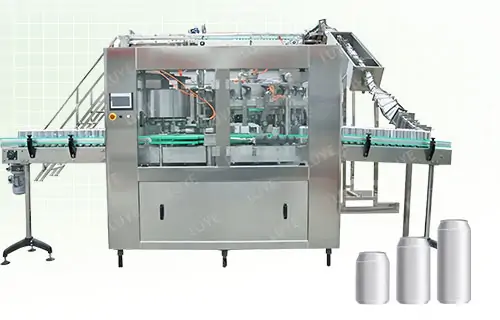




How to Select Oil Filling Machine for Food Factory
Selecting the right oil filling machine for a food factory requires matching equipment capabilities with production scale, oil characteristics, and packaging requirements. This helps ensure efficiency, accuracy, and food safety compliance.

Define Your Production Scale and Target Output:
First, calculate your daily output needs. Then think about potential growth over the next three years.
For small-scale production under 3,000 bottles per day, a semi-automatic machine offers lower upfront costs. Medium-scale production between 3,000 and 15,000 bottles per day typically needs a fully automatic 4-to-8-head filling machine. Large-scale operations above 15,000 bottles per day require high-speed multi-head rotary or linear filling systems.

Match Filling Technology to Oil Viscosity:
Oil viscosity is the most critical factor in machine selection. Different oils flow differently, so the filling method must match your product.
- Low-viscosity oils (soybean, corn, sunflower): gravity or flow meter filling works well.
- Medium-viscosity oils (standard edible oils): volumetric filling using gear pumps or piston fillers.
- High-viscosity oils (sesame, olive, cold-pressed): piston filling machines are preferred.
For oils containing solid particles like flavored oil with chili or sesame seeds, a piston filler is essential to prevent clogging.
Consider Container Types and Packaging Formats:
For PET plastic bottles from 0.1L to 5L, most standard oil filling machines can adjust with quick-change tooling. For larger containers of 10L to 25L, flow meter systems are more suitable.
If you use multiple bottle sizes, look for machines with adjustable height, nozzle spacing, and clamping mechanisms that store settings for different formats.
Evaluate Automation Level and Integration Options:
Semi-automatic machines: require manual bottle placement, fill 200-300 bottles per hour, suitable for small batches.
Fully automatic systems: integrate bottle indexing, filling, capping, labeling, and coding into a continuous line, producing 800-1,500 bottles per hour with one operator.
Luye Machinery provides complete oil filling production line solutions, including oil filling machine, capping machine, labeling machine, automatic packaging machine, and automatic palletizing system.
Our oil filling machine adopts PLC control system with touch screen display. This design makes operation easy and ensures high filling accuracy. We offer rotary carousel designs for medium to large facilities. We also offer linear-type systems for smaller or multi-product lines.

Prioritize Hygiene, Accuracy, and Compliance:
Food safety is essential in edible oil packaging. Your oil filling machine should meet several critical standards:
Food-grade stainless steel (SUS304 or SUS316L) for all product-contact parts.
CIP (Clean-in-Place) capability for automated cleaning without disassembly.
Filling accuracy of ±0.5% to ±1% for standard oils; servo-driven systems can achieve ±0.25% for high-value oils.
Drip-proof nozzles and anti-foam design to minimize waste.

Assess Manufacturer Reputation and After-Sales Support:
Choose a manufacturer with proven experience and reliable equipment. A reputable supplier provides targeted solutions based on field experience. They also offer comprehensive after-sales support including installation, training, and spare parts availability.
Luye Machinery also provides a complete pretreatment system for food and beverage production lines, helping prepare materials before the filling process.
FAQ:
Q1: What is the filling accuracy of a typical oil filling machine?
A: Standard accuracy ranges from ±0.5% to ±1%. High-end piston or servo-driven systems can reach ±0.25%.
Q2: Can one machine handle different bottle sizes?
A: Yes. Most modern machines offer adjustable height, nozzle spacing, and clamping mechanisms with stored settings for quick changeovers.
Q3: Semi-automatic or fully automatic for a small factory?
A: For under 3,000 bottles per day, semi-automatic is cost-effective. If you anticipate growth, choose modular designs that can be upgraded later.
Q4: What materials ensure food safety?
A: All product-contact parts should be SUS304 or SUS316L food-grade stainless steel.
Q5: How to choose between piston, flow meter, and overflow fillers?
A: Piston for high-viscosity oils, flow meter for medium-viscosity with high accuracy needs, overflow for low-viscosity where visual level consistency matters.


