


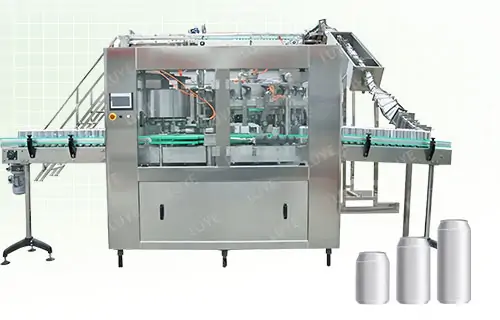




How Does Filling Pressure Reduce Foam in Carbonated Beverages
Carbonated beverage filling pressure control coordinates product temperature, liquid-tank pressure, bottle pressure, filling speed, and exhaust timing. When these conditions work together, the line can limit foam, retain dissolved CO₂, and maintain a more consistent filling level.

Equal Pressure Supports Stable Carbonated Filling:
Carbonated drinks behave differently from still water during filling. A sudden pressure drop releases dissolved CO₂ and creates foam. Consequently, a gravity filling method cannot provide stable results for most carbonated beverages.
LUYE’s PGF series uses an equal-pressure filling process. The machine raises the bottle into position and confirms its presence. It then connects the CO₂ path and balances pressure between the bottle and the filling cylinder.
Filling begins after the pressure reaches the required condition. This sequence allows the beverage to enter with less disturbance. A complete carbonated drink production line also coordinates beverage preparation, filling, capping, labeling, and final packaging.
Product Temperature Influences CO₂ Retention:
Temperature directly affects how well a beverage holds dissolved CO₂. A colder product normally retains carbonation more easily. However, a warmer beverage releases gas faster and can create additional foam inside the bottle.
During commissioning, our technicians check product temperature together with tank pressure and filling behavior. Looking at pressure alone can hide the actual cause of unstable filling.
For example, increasing pressure may not solve foaming when the beverage enters the filler above its specified temperature. Instead, the production team should review chilling, transfer time, pipe insulation, and product circulation.
Therefore, the beverage preparation section and filler should operate as one process. Changes upstream can quickly affect the condition inside each filling valve.
Filling Valve Timing Controls Liquid Flow:
Carbonated beverage filling pressure control also depends on valve timing. The machine must coordinate bottle lifting, pressure equalization, liquid flow, filling completion, and pressure release.
The operating sequence normally covers:
- Accurate bottle positioning under each filling valve
- Bottle lifting and sealing against the valve
- Pressure equalization between the bottle and product cylinder
- Controlled beverage flow into the container
- Filling-level detection or flow termination
- Gradual release of gas from the bottle neck
LUYE’s published filling process returns displaced CO₂ through the connected gas path during filling. When the beverage reaches the required level, the machine stops the liquid flow. It then releases the remaining bottle-neck pressure gradually.
Meanwhile, the operator should inspect seals, lifting parts, gas passages, and valve movement. A worn seal or restricted gas path can disturb equalization and cause different filling levels.

Container Conditions Affect Foam and Filling Accuracy:
Bottle dimensions, neck finish, wall strength, and internal cleanliness affect pressure filling. The machine needs a stable bottle seal before equalization begins. Damaged bottle mouths can allow gas to escape.
The published LUYE PGF carbonated drink production line covers the following equipment range:
- Round plastic bottle volume: 200–2000 ml
- Bottle diameter: Φ50–120 mm
- Bottle height: 160–320 mm
- Bottle-mouth diameter: Φ25–38 mm
- Published output range: 3000–36000 bottles per hour
These values describe the range shown on the official product page. A specific project still requires confirmation of the bottle drawing, closure, beverage recipe, and required output.
In addition, pressure settings cannot correct an unsuitable bottle. Lightweight bottles need enough structural strength to withstand filling and conveying conditions.
Beverage Preparation Maintains Filling Conditions:
The filler cannot compensate for unstable beverage preparation. Water quality, syrup ratio, product temperature, CO₂ dosage, and transfer pressure all influence the final result.
A CO₂ beverage drink mixer combines treated water, syrup, and carbon dioxide before the product enters the filler. Moreover, cooling helps the liquid absorb and retain the required carbonation level.
Our technicians commonly review the following points when foam levels change:
- Product temperature at the filler inlet
- Carbonation and mixing conditions
- Product-tank pressure stability
- Filling-valve opening and closing sequence
- Bottle sealing and lifting condition
- Exhaust speed after filling
This check separates preparation problems from mechanical problems. As a result, the maintenance team can avoid unnecessary valve adjustments.
Gradual Exhaust Reduces Product Disturbance:
Pressure release after filling needs careful control. If the machine vents the bottle too quickly, the beverage may foam and rise toward the bottle mouth. This can cause product loss and interfere with capping.
Therefore, LUYE’s filling process releases the CO₂ stored in the bottle neck gradually. The transition from filling pressure to atmospheric conditions should remain smooth and repeatable.
Carbonated beverage filling pressure control does not rely on one universal setting. Different recipes, temperatures, carbonation levels, containers, and line speeds need different parameters.
The production team should establish approved settings during commissioning. Operators should then record product temperature, tank pressure, alarms, foam condition, and filling level during normal production. These records help technicians identify changes without relying on guesswork.
FAQ:
Q1: Why does a carbonated beverage foam during filling?
A: Foam usually increases when temperature rises, pressure changes too quickly, or the filling and exhaust sequence becomes unstable.
Q2: Why does the bottle need pressure equalization?
A: Equalization reduces the pressure difference between the bottle and filling cylinder, allowing the beverage to enter more smoothly.
Q3: Can operators use one pressure setting for every beverage?
A: No. Product temperature, CO₂ level, container type, recipe, and production speed all affect the required setting.
Q4: Which conditions should technicians check first?
A: They should check product temperature, tank pressure, bottle sealing, valve movement, gas passages, and exhaust timing.


