






How Can Beverage Package Changeover Planning Reduce Downtime
Beverage package changeover planning connects container drawings, beverage properties, change parts, and operating procedures before production begins. At Suzhou LUYE Packaging Technology Co., Ltd., our technical team reviews these details when configuring filling and packaging equipment for water, juice, carbonated drinks, beer, wine, and other liquid products.

Container Format Defines the Mechanical Route:
PET bottles, glass bottles, and aluminum cans follow different mechanical routes. Each container requires suitable conveying, positioning, filling, and sealing components. Even two PET bottles with the same volume may need different guide rails or star wheels.
During project reviews, our engineers often receive the bottle drawing after the initial line layout. This can create avoidable changes because neck finish, body diameter, height, and base shape affect container transfer.
A complete beverage filling production line should start with approved container samples or technical drawings. In addition, the line layout should reflect the container’s stability and handling requirements.
PET bottles often use neck or body handling. Glass bottles need controlled contact to reduce impact. Meanwhile, cans require stable base support and accurate transfer into the filling and seaming sections.
Beverage Properties Determine the Filling Method:
The package cannot determine the machine alone. The beverage also affects the filling valve, product tank, temperature control, and sanitation process.
Still water normally requires a different filling approach from carbonated drinks. Juice and tea may involve hot filling, while carbonated beverages and beer require controlled pressure. Therefore, the technical team must review both the container and the liquid.
For example, a PET bottle for still water may not suit a hot-fill product. The bottle material and wall structure must tolerate the specified filling temperature. Likewise, a lightweight can can deform if transfer pressure or guide-rail settings remain incorrect.
The closure system also changes with the package. PET bottles may use plastic caps, glass bottles may use crown caps or other closures, and cans need a matched seaming system. Consequently, a simple size adjustment cannot convert every machine from one container family to another.

Change Parts Control the Conversion Process:
Beverage package changeover planning should identify every part that contacts or guides the container. A complete change-part list reduces trial adjustments during production.
The main items normally include:
- Infeed screws and container guides
- Transfer star wheels and center guides
- Filling valve lifting or support components
- Cap chutes, capping heads, or seaming parts
- Conveyor guide rails and sensor positions
- Labeling and packing machine settings
Operators should mark and store change parts according to the container format. Moreover, each set should include a clear installation reference. This approach helps the maintenance team avoid mixing similar components.
However, change parts cannot correct an unsuitable machine design. The equipment must already support the required container range, filling process, and closure type. Otherwise, the plant may need a larger mechanical modification.
Utilities and Sanitation Affect Changeover Time:
A container change often requires more than mechanical adjustment. Plants may also need to change the beverage, filling temperature, pressure setting, cleaning program, or packaging material.
For this reason, the operating team should separate mechanical changeover from product-contact cleaning. Combining both activities without a defined sequence can extend downtime and make troubleshooting difficult.
Water, compressed air, electricity, steam, and cooling conditions also affect the restart. Furthermore, operators should confirm that filling valves, pipelines, and product tanks meet the next beverage’s sanitation requirements.
No single cleaning recipe suits every product. Water, juice, milk-based drinks, beer, and oil can leave different residues. Therefore, the plant should set cleaning parameters according to the beverage, equipment manual, and local hygiene requirements.
Project Data Supports a Practical Configuration:
LUYE engineers normally request container drawings, physical samples, beverage information, closure details, and target output during project discussions. This information helps the team select suitable filling, conveying, labeling, and packing sections.
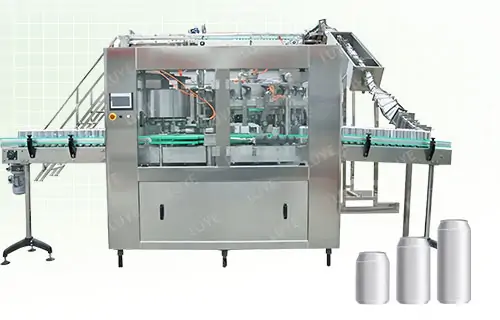
When a project includes a can filling production line, the discussion must also cover can dimensions and lid specifications. The filling section and seamer need a compatible container-and-lid combination.
A recurring project issue involves customers planning several packages without defining their production schedule. Frequent changes between small batches can reduce effective output, even when the machine runs at the specified speed.
Therefore, buyers should consider batch size, changeover frequency, operator skill, and spare change-part storage. Beverage package changeover planning works well when the factory treats it as part of production management, not only as a machine setting.
Still, one line cannot always handle PET bottles, glass bottles, and cans through simple adjustment. Different containers may require separate filling and sealing systems. LUYE evaluates this limitation during technical discussions so the final configuration matches the actual production plan.
FAQ:
Q1: Can one filling line handle several bottle sizes?
A: Yes, if the machine supports the required size range and uses suitable change parts. The technical team must check every bottle drawing first.
Q2: Can one machine fill PET bottles and cans?
A: Usually, the containers need different filling, transfer, and sealing systems. A simple change-part replacement may not provide a practical conversion.
Q3: Which container details affect changeover?
A: Neck finish, body diameter, total height, base shape, closure type, and container stability all affect the changeover.
Q4: How can a plant shorten changeover time?
A: The plant should prepare labeled change parts, documented settings, trained operators, container samples, and a defined cleaning sequence.


